Concrete Cutting in Albany CA - Straight Cuts and Slurry Kept Out of the Street
Got a sunken driveway panel, a patio section to remove or a wall opening to cut? We cut it straight and leave the street clean.
Send a photo of the concrete to cut
A photo of the surface, plus a note on whether the cut reaches the sidewalk, tells me which saw to plan for, so call (341) 386-0182 or use the form.
What does concrete cutting involve at your house?
Concrete cutting in Albany means sawing straight, controlled lines through concrete, across a driveway or patio or through a wall, so a damaged section comes out cleanly and new work has a square edge to meet.
Most people call us when one piece of a slab has gone bad and the rest is fine, or when they want part of a patio or wall opened up. The price moves with how many feet we cut, how thick the concrete is, how much rebar, the steel rods inside most slabs, the blade has to get through, and how easy the spot is to reach with a saw and a vacuum. The schedule mostly turns on whether the cut reaches the sidewalk, because work there needs a city permit before we start. I measure all of it on site and give you the price in writing.
Why Albany homeowners call Albany Concrete Works for concrete cutting
I measure and stay on site
I come out to measure and write the estimate myself, and I'm on site with our crew while we cut. We've run every job that way since starting in 2023.
We're licensed and fully insured
A cutting job brings saws, water and a truck onto your property, so you want the coverage in place before anyone starts. Our work is backed by our satisfaction guarantee.
Slurry kept out of Albany's gutters
We catch the slurry before it leaves your property, which matters here because Albany's code bans it from sidewalks, gutters and storm drains. Any fines and cleanup costs fall on the contractor or the owner.
If you've got a slab, patio or wall that needs a cut, send us a request with a photo or call (341) 386-0182.
How we do concrete cutting
I walk the job with you first, and we mark the cut lines together so there's no question where the saw goes. Then we pick the saw for the surface, since a driveway and a wall opening need different setups. Before the blade touches concrete, we set up to catch the slurry, the gray mud the water and cutting dust make, so the wash water stays on your property and out of the street. Then we make the cuts and break the section out.
Cutting is usually the first half of a job. Once a sunken or cracked section is out, we can pour the new piece as part of concrete driveway building, starting with a base that's dug out and packed so it doesn't settle like the old one did. The same goes for a patio you're widening or patching, which we take on through concrete patio construction. If the budget's tight, I'd rather you spend it on the base than on a fancy finish, because the base is what keeps the new piece level with the old.
Flat sawing for driveways and patios
A walk-behind saw rolls across the slab, and it's the usual way to cut driveways, patios, sidewalks and floors. It suits taking out a sunken panel, trimming an edge or cutting a channel for a drain line.
Wall sawing for openings
A track-mounted saw rides a rail fixed to the wall, so it can cut a straight vertical opening. On a very thick or heavily reinforced wall, a wire saw may come in to finish the sections the blade can't reach.
How do you know a section of concrete needs to be cut out?
One panel has sunk
One square of the driveway sits lower than the rest, usually because the dirt under it settled. Cutting out just that panel beats replacing the whole slab, as long as the sinking hasn't spread.
Water pools by the house
After rain, water sits against the garage or the house wall, which usually means a section slopes the wrong way. Each storm sends water at your foundation until that piece is cut and repoured.
An edge you trip on
A raised lip where two sections meet usually means roots or soil pushed one side up. It only gets higher and it catches toes, so cutting the lifted piece out is usually the clean fix.
A chipped, crumbling patch
Chipping and a dusty, flaking surface in one spot usually means weak concrete on top. It spreads over time, and a square cut around it gives new concrete solid edges to meet.
What happens after you call us about concrete cutting in Albany?
Call or send a request
We get back to you, then I come out, look at the surface with you and take measurements. You get the price in writing before anything goes on the schedule.
We line up permits and cut
Once you say go, we take care of any permit paperwork and set our schedule around the city's inspections. Then we set up the slurry catch and make the cuts.
Clean up and walk it
We haul off the broken pieces, clear the slurry and leave your property and the street as clean as we found them. Then we walk the finished job with you.
Concrete cutting questions we hear
These are the questions Albany homeowners ask most before a cut. If yours isn't here, send a photo of the surface and ask about your own job.
How much does concrete cutting cost in Albany, CA?
Professional concrete cutting across the US usually costs about $3 to $10 per linear foot of cut. Where a job lands in that range depends on how thick the concrete is, how much rebar is in it and whether it's a flat slab or a wall. I'll measure yours and give you the price in writing.
Do I need a permit to cut concrete in Albany?
If the cut is in the public right of way, such as the sidewalk in front of your house, you need an Encroachment Permit from the city on top of any building permit. Albany's Building Division issues building permits and takes applications through Cloudpermit, its online portal, so ask them about cuts on your own slab or walls. We handle the permit paperwork for you, or we'll tell you what we need if you'd rather pull it yourself.
Why is concrete cut wet?
Concrete is cut wet because the water cools the blade and turns the cutting dust into slurry instead of a cloud. That dust carries crystalline silica, tiny particles that can travel deep into the lungs and cause silicosis, a lung disease with no cure. The trade-off is that slurry has to be caught, and we plan for that before the first cut.
How do I get ready for a concrete cutter to come out?
Agree on exactly where the cuts go and have them clearly marked before the saw arrives. One trade group's sawing specification puts that on the owner, along with marking the location and type of anything embedded on or near the lines, and deciding whether over cuts, where the blade runs a little past a corner, are allowed. Bay Area stormwater agencies also advise blocking the path to the nearest storm drain with sandbags in the gutter or around the inlet. We mark the lines with you and go over the rest at the estimate.
How do I hire a licensed concrete cutting contractor in California?
Look for a licensed contractor, since California's Contractors State License Board describes concrete related services contractors as the ones who do concrete sawing, breaking and coring. The board also says a contractor can't ask for or take a down payment over $1,000 on a home improvement job, and the cap is lower on smaller jobs. Later payments should be listed in the contract and tied to work already done or materials delivered.
Do you do concrete cutting outside Albany?
Yes, we're based in Albany and take jobs in many cities around it, from Berkeley and Oakland to Richmond, Pinole and Vallejo, and across the bridge to San Rafael. Send a photo and your address, and we'll tell you if we can get there.
Get a written price for your cut
Tell us what needs cutting, add a photo and note whether it touches the sidewalk, and we'll reply within one business day. I'll come out, measure and give you a free written estimate with no obligation.
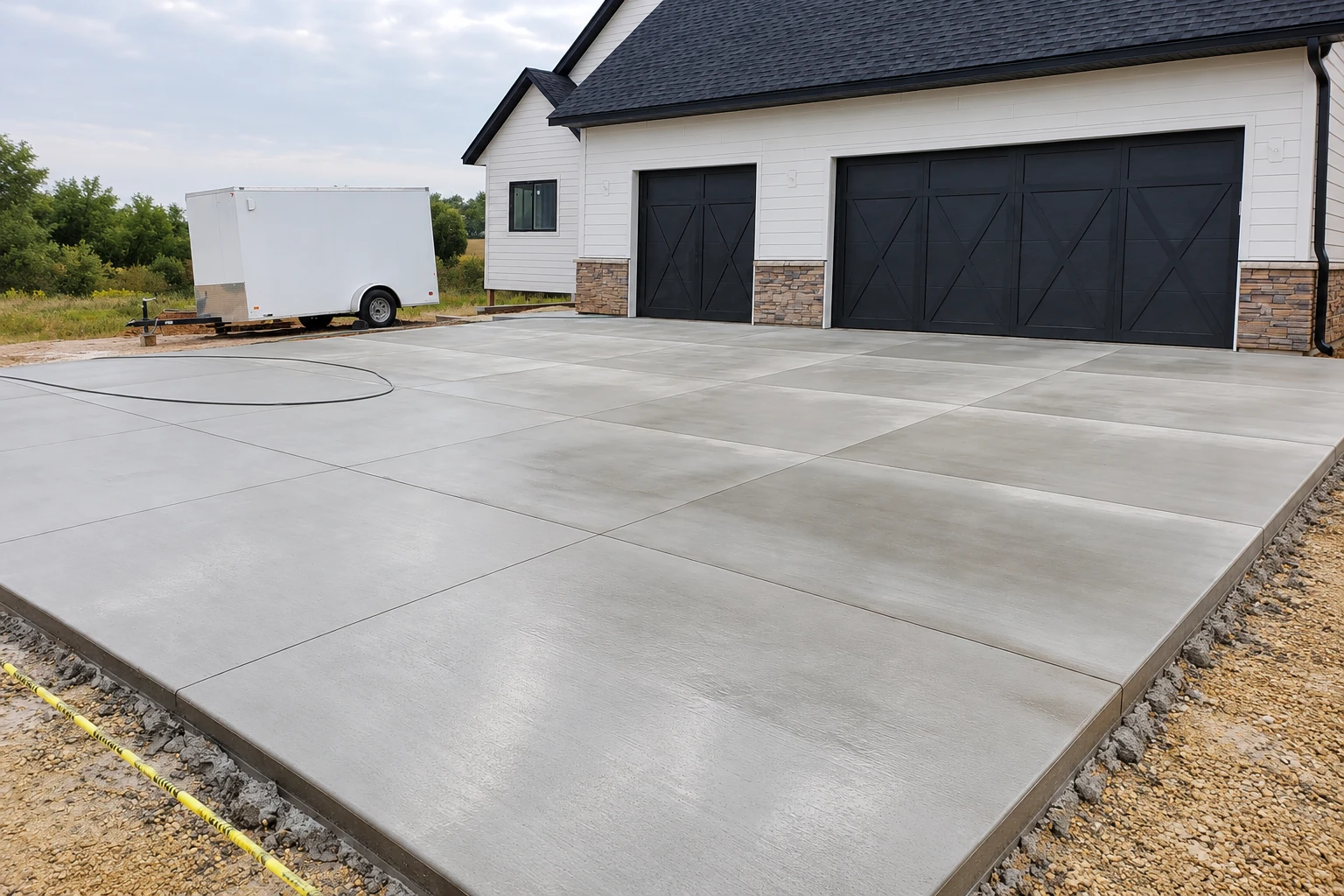
What clean saw cuts look like
Work that often follows a cut
Concrete driveway building
When a cracked or sunken driveway section comes out, the new concrete still needs a dug-out, packed base and a pour that sits level with the slab around it.
Learn moreConcrete patio construction
If you're widening a patio, adding a step-down or replacing a cracked panel, the cut sets the edge and the new pour fills in from there.
Learn more