Concrete driveway building in Albany CA - a driveway built on solid ground
Cracked, sinking or puddling driveway? We dig out the base, pour a slab that drains away from your house, and clean up after.
Get a written price for your driveway
Call (341) 386-0182 or use the form, and tell us the rough size and whether the work reaches the sidewalk so I can plan the visit.
What goes into building a concrete driveway in Albany?
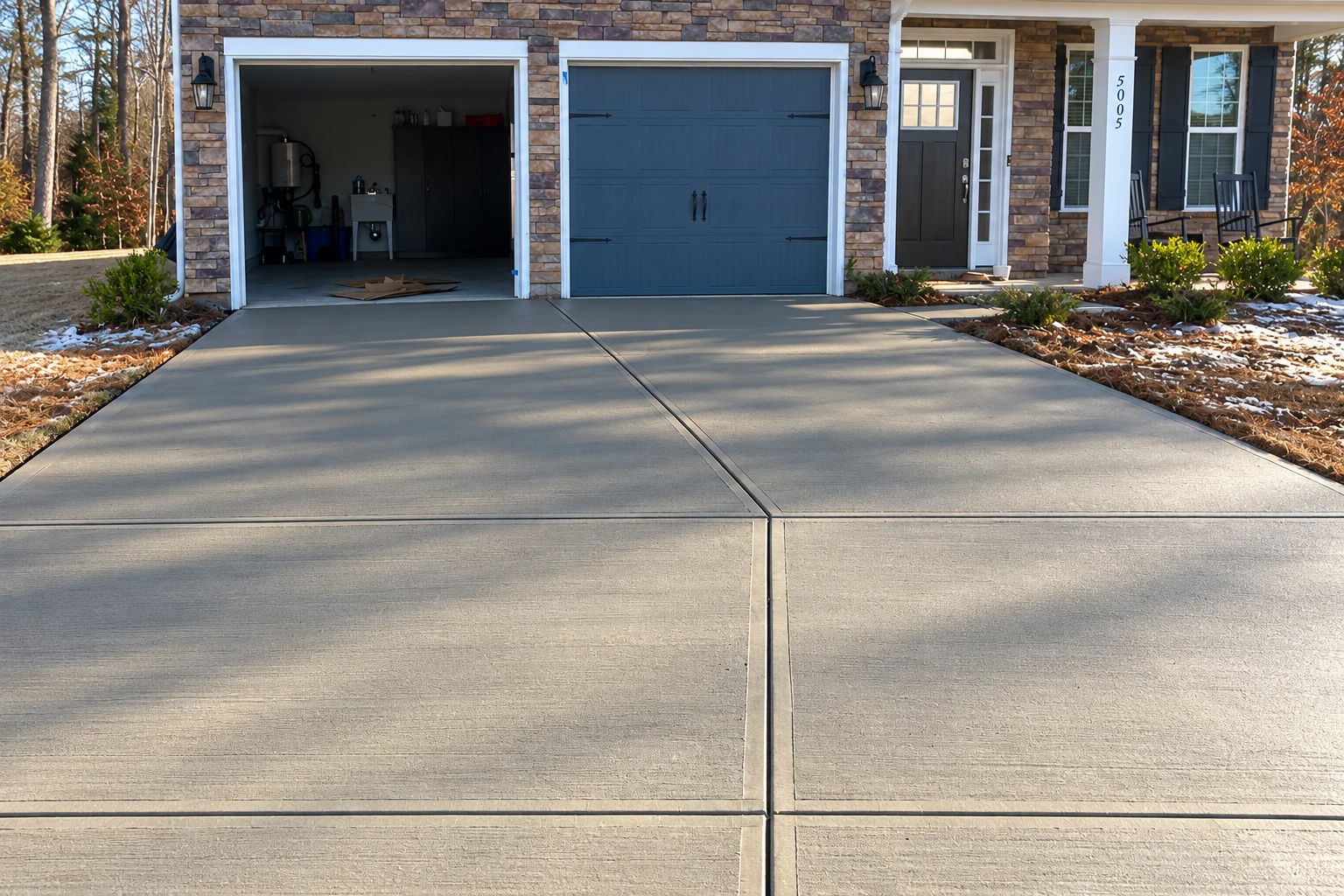
Concrete driveway building in Albany starts with digging out and packing the subgrade, the soil the slab sits on, then pouring concrete at least 4 inches thick, so you end up with a driveway that stays flat under your car.
Most calls start with an old driveway that's cracked, sunk at one corner or holding water after rain. The price turns on the size, how thick the slab is, whether the old concrete has to come out first and how much work the ground needs before we pour. The schedule turns on permits and inspections, the weather on pour day and the days the concrete needs to cure and harden before a car goes on it. If your driveway work reaches the sidewalk or the street, we take care of the city permits and plan our days around the inspections. My estimate puts your number in writing.
Why Albany homeowners call Albany Concrete Works for driveways
I price it and I'm there
I've run this business in Albany since 2023, and I measure and write your estimate myself. Then I'm on site with our crew while it's built, so nothing gets lost between the price and the pour.
Licensed for driveway work, fully insured
California counts building or replacing a driveway as home improvement, which the state's Contractors State License Board licenses. We're licensed and fully insured, so the crew on your property is covered.
Careful around Albany street trees
Albany treats cutting any of a street tree's roots as damage to public property. I check the trees by your approach, where the driveway meets the sidewalk, and we plan the dig around them.
Start with the ground under your driveway. Send me the details on our contact page and I'll set up a visit.
How we build a concrete driveway
A driveway is only as good as the ground under it, so we put real time into the base before the truck shows up. We break out and haul off the old slab, dig down, replace soft spots with gravel or crushed rock, and pack the base firm and even instead of raking dirt level and hoping. We set the forms so the slab falls away from your house and water runs off, add rebar, the steel bars that hold a slab together if it cracks, where the job calls for it, and pour early in the day because midday heat leaves a weak, dusty top. Then we give it a broom finish, a light texture so tires and shoes grip when it's wet, and cut control joints on time, the shallow grooves that tell the slab where to crack so it happens in a straight line and not across the middle. If the budget's tight, I'd rather trim the finish than the base, because you can't fix a bad base later without tearing out the slab. I'll tell you when it's ready to take your car, and we ask that you wait for that word.
Plenty of driveway jobs grow into the rest of the yard. If you want a flat place to sit out back, we build concrete patios on the same kind of base, and if you'd like a driveway border or walkway with the look of stone or brick, ask about stamped concrete.
Standard 4-inch slab
This suits most driveways that see everyday cars, since 4 inches is the usual minimum on a well-packed base. It keeps the concrete bill down without cutting anything underneath.
Thicker 5-inch slab
This suits you if a truck, a trailer or a heavy van parks there. One industry guide figures the extra inch adds about 20% to the concrete cost and carries nearly 50% more load.
How do you know it's time for a new driveway?
Cracks that keep spreading
Long cracks that widen or split into a web usually mean the base under the slab has moved. Patching hides them for a season, and water getting in makes the next ones worse.
One side sinking
A corner or panel that drops below the rest usually means the dirt under it was never packed. The step it leaves trips people and grows as more soil washes out.
Water running toward the house
Puddles that sit after rain, or water heading for your garage, mean the slab has lost its fall. Every wet season you wait, that water soaks the ground next to your foundation.
A dusty, chipping top
A surface that flakes or powders under your shoe usually comes from a weak top layer. Tires and rain wear it down faster each year, and resurfacing rarely holds on a cracked slab.
What happens when you call us about a driveway in Albany?
Call or send a request
You call or send the form, and we set a time for me to come out. I walk the driveway with you, take measurements, check drainage and give you the price in writing.
We line up and pour
Once you say go, we line up any permits and inspections and build the schedule around them. Then we dig out, pack the base, pour and finish in the order we told you.
Clean up and walk it
We clean your property and the street before we leave. Then we walk the finished driveway with you so you can see the joints, the finish and where the water runs.
Driveway questions we hear most
These are the questions Albany homeowners ask most before a new driveway goes in. If yours isn't here, call or send the form and ask about your own driveway.
How much does a concrete driveway cost in Albany, CA?
A concrete driveway without reinforcement in the Bay Area usually costs about $8 to $14 per square foot, not counting removal of an old driveway. Replacing an existing driveway can cost more per square foot when the old slab has to be torn out, and thickness, rebar and base work move the number too. I'll put your price in writing at the estimate, and the work is backed by our satisfaction guarantee.
How long before I can park on a new concrete driveway?
One guide says driving and parking typically start seven days after the pour, and RVs and large trucks wait at least 28 days. A more recent guide treats those as testing ages, not a green light, and advises driving on it only after the contractor approves your vehicle's load in writing. Keep the car off until I give you the word.
Do I need a permit to build a driveway in Albany?
Yes, if the work reaches the public right of way, such as building or widening the driveway approach, Albany requires an encroachment permit, plus a building permit where one is required. New building permit applications go through the city's online portal, Cloudpermit, as the Albany Building Department asks. If you'd rather pull the permit yourself, I'll tell you what we need from you, and for work that stays on your lot, ask the building department what your job needs.
How long does a concrete driveway last?
A concrete driveway can last 40 years or longer, and it needs less downtime for routine upkeep than asphalt. That's why the week or so without parking while it cures is a short wait for what you get.
Can I drive on pavers sooner than a poured concrete driveway?
Yes, concrete pavers can be driven on right after they're installed, unlike poured concrete. They make sense if you truly can't go without parking, and if you can wait out the cure, a poured slab on a good base is what we'd build.
How do I choose a concrete driveway contractor in Albany?
Ask how they'll prepare the base and how they'll handle cleanup, because those two answers tell you the most. Albany treats anything other than rain water running off a job, concrete wash water included, as an illicit discharge, so it's fair to ask where the wash water goes. We keep ours contained and haul it off.
Get a written driveway estimate
Tell us the driveway's rough size and whether the work reaches the sidewalk or the approach. We reply within one business day to set up a free on-site estimate, and I'll bring the price in writing with no obligation.
Concrete driveway examples
Other concrete work for your yard
Concrete patio construction
If the back yard is bare dirt or cracked old pavers, a poured patio gives you a flat, level spot for a table and a grill.
Learn moreStamped concrete services
When plain gray isn't the look you want, stamped concrete gives a border, walkway or patio the pattern of stone, brick or slate.
Learn more