
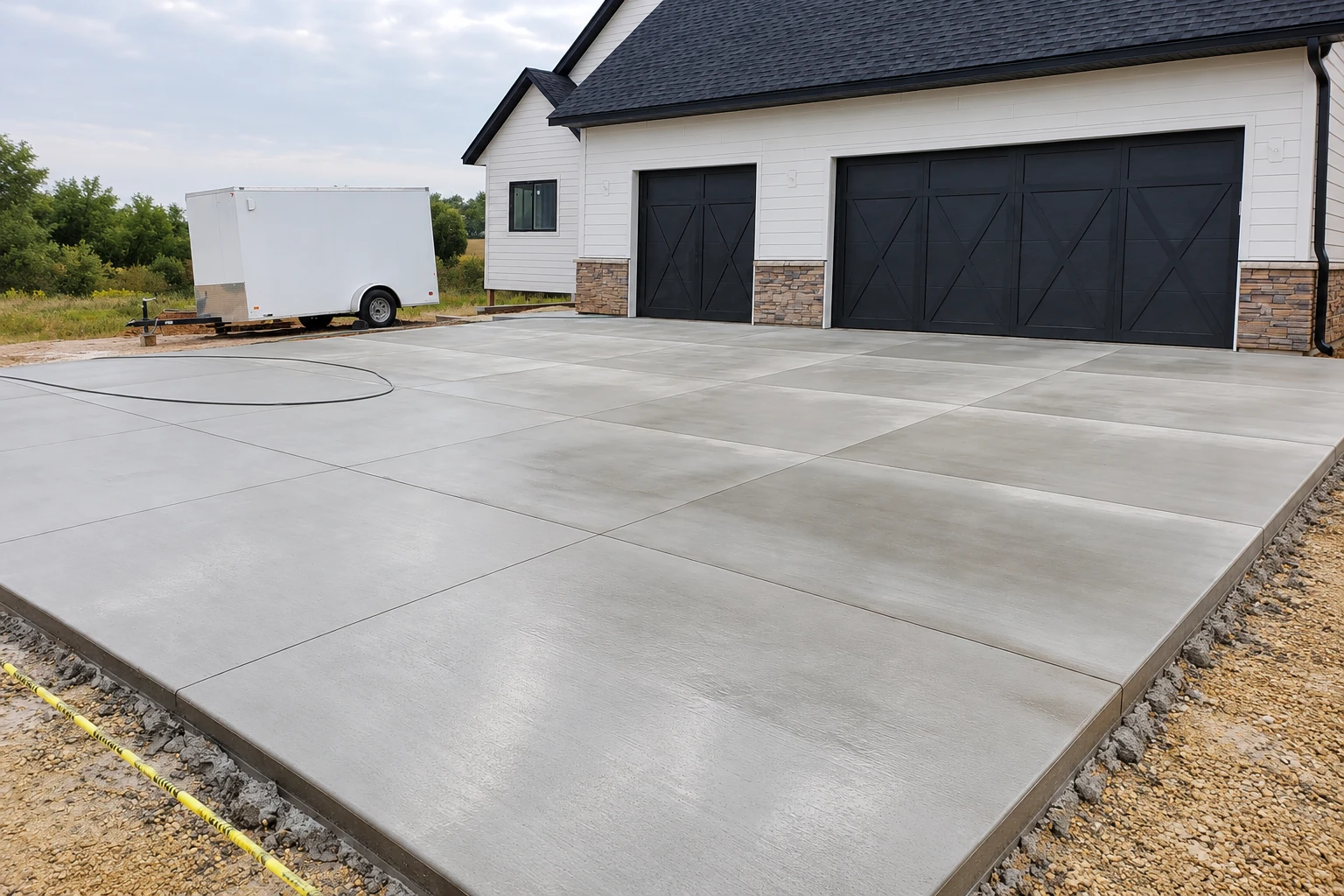
Concrete Floor Installation in Albany CA - a slab that's set up right before the pour
Old floor cracked, or a new room going in? We set everything that runs under it first, then pour a floor ready to cover.
Get your new floor on the schedule
Call (341) 386-0182 or send the form, because the pipes, the inspection and the pour all have to be booked in the right order.
What does installing a concrete floor in Albany involve?
Concrete floor installation in Albany means pouring a new slab in place after every pipe and conduit that runs in or under it is set, so the cured slab can carry the tile, wood or coating you lay over it.
Usually it's a garage, an addition or a room where the old floor has cracked or sunk and the new covering can't go down until it's fixed. The price moves with the floor's size, how much has to be broken out first and whether the slab is reinforced, which is priced above a plain pad. The schedule turns on what runs underneath, because everything under the slab has to be set and checked before we pour, and then on the curing wait. If your job needs a permit, we handle the paperwork with the city or county and set our dates around the inspections. You'll get your own figure in writing at the estimate.
Why Albany homeowners call Albany Concrete Works for a new floor
Same person, estimate to pour
I come out to measure and write your estimate myself, and I'm on site with our crew while the work gets done. You're not explaining your floor twice to different people.
Licensed and fully insured crew
We're licensed and fully insured. Whoever you hire, ask about both, plus a current Albany business license, which the city requires of any contractor when the permit is issued.
Base built for East Bay clay
Across Alameda County, a large share of the soil is expansive clay, which swells when wet and shrinks when dry. Ground like that moves under a slab, so we build your base as if your lot has it.
On a floor, what counts most is the work you can't see once the concrete's down. Send your floor details or call (341) 386-0182, and I'll come take a look.
How we install a concrete floor
We break out the old floor if there is one, dig down to firm ground and pack the subgrade, the soil and gravel the slab sits on, because a base that's only raked level settles with the dirt. Then we get the pipes and conduits set and the slab inspection lined up before we book the pour. A vapor retarder, a plastic sheet that stops ground moisture, goes down next, and it protects your tile, wood or coating best when it touches the slab directly. Concrete poured straight on that sheet cracks more easily, though, so the finishing waits until the bleed water, the water that rises to the top after the pour, has left the surface. Before the pour I'll show you where the rebar, the steel that holds a slab's cracks tight, will sit, and we cut control joints, shallow grooves that tell the slab where to crack, early so it doesn't pick its own spots. If the budget gets tight, cut somewhere other than the base, because nobody sees it on day one but it's the one part you can't fix later without breaking the floor out.
When the floor goes into an addition or a garage, the way in often needs concrete steps too, and it's simpler to form them while the crew and the truck are already here. If the new room opens onto the backyard, we also build concrete pool decks, and planning both pours together saves you a second round of setup.
New slab for an addition or room
Suits a new room, a converted garage or any space where plumbing or wiring has to run under the floor. Those jobs lean hardest on getting the pipes set and inspected before we pour.
Replacing an old, cracked floor
Suits a room where the old slab has cracked, sunk or let moisture through and the flooring keeps failing. We break it out and fix the base, because pouring over the old problem just buries it.
How do you know your concrete floor needs replacing?
Cracks that keep widening
A hairline crack is normal, but one that keeps opening or has one side higher than the other usually means the ground under it moved. Waiting lets water in and the gap grow.
A floor that dips
A low spot, a dip by a wall or a floor that rolls underfoot usually points to a base that settled. The longer it goes, the more tile cracks and doors stick.
Damp spots or lifting flooring
Dark patches, a musty smell or flooring that curls or lets go usually means moisture is coming up through the slab. Covering it again just ruins the next floor too.
Dusty, chipping surface
A top that powders when you sweep or chips under a chair leg usually means it was finished too early or dried too fast. It only wears down further while you wait.
What happens after you call about a concrete floor?
Call and book the estimate
Call or send the form, and I come out, measure the room and look at what runs under and around it with you. You get the price in writing.
Pipes, inspection, then the pour
Once you say go, we line up permits and get the pipes set. The city's slab inspection comes once everything under it is placed, and we pour only after it.
Clean up and walk the floor
We clean up the site and the street, then walk the finished floor with you. You'll know when it's ready for foot traffic and when it can take heavier loads.
Concrete floor questions we hear
Here's what Albany homeowners tend to ask before a new floor goes in. If your job doesn't fit these answers, ask me about it at the estimate.
How much does a concrete floor cost in the Bay Area?
Concrete slab installation in the Bay Area usually costs about $9 to $18 per square foot. That's the going rate for the slab, not our price, and I'll give you your own number in writing after I measure.
Will my new concrete floor crack?
Probably a little, because all concrete tends to crack and a completely crack-free slab isn't possible. Wire mesh or rebar can't stop cracks, but placed in the proper spot it keeps them narrow, so it's worth asking any contractor where theirs will sit.
How long does a new concrete floor take to cure before I can use it?
A new slab should be walkable within 48 hours and takes about a month to fully cure. Heavier loads may need to wait a week to be safe, so plan that first week around light use. Industry guidance is to spray the new slab with a liquid curing compound or keep it under damp burlap for at least 3 days, because curing, the slow hardening, needs moisture.
Can I pull a building permit for a concrete floor in Albany myself?
Yes, the City of Albany issues building permits and lets property owners apply themselves, either listing their contractor or acting as owner-builder. To go owner-builder, you have to own the property, do the work yourself and have the home as your primary residence for at least 12 months before the work is complete. If you pull it and hire us, we'll tell you what we need from you.
Does Albany require a special inspector for concrete floor work?
It can. Albany's Building Inspector may require a special inspector during certain construction, such as concrete and reinforcing steel work, so we ask about it early when we line up the permit.
How do I know if a concrete contractor needs a California license?
If the job is over $1,000, needs a permit or the person has anyone working for them, they need a state license. California lets unlicensed people take on minor work up to $1,000 only when it needs no permit and they employ no one.
Get a written price for your floor
Send the floor's size in square feet, the room and the covering you plan, and we'll reply within one business day. Then I come out for a free on-site estimate, in writing, with no obligation.
Concrete floors and slabs
Work that often goes with a floor
Concrete pool decks
If you're redoing the backyard too, a pool deck needs a surface that drains away from the water and gives wet, bare feet some grip.
Learn moreConcrete steps construction
When a new floor changes the height at a doorway, solid concrete steps give you an even rise in and out instead of a tall first step.
Learn more