
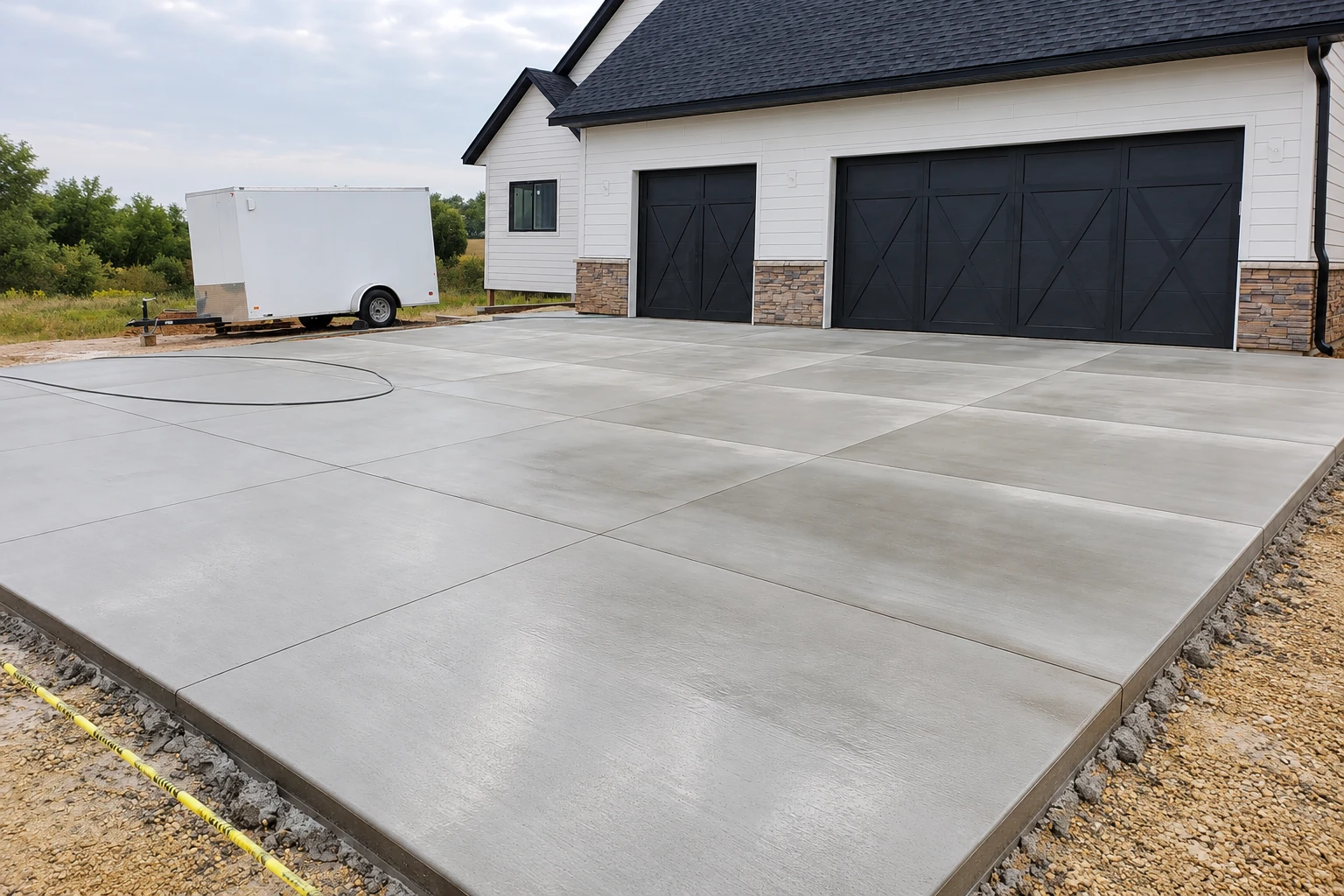
Garage floor concrete in Albany CA - a solid floor on a dug-out, packed base
Cracked, sunken or dusty garage floor? We pour a new slab on a packed base, with joints placed where cracks should go.
Request an estimate for your garage floor
Call (341) 386-0182 or use the form, and have your garage size in square feet, a few photos of the current floor and a start date in mind so we can plan the visit.
What goes into a new concrete garage floor?
Garage floor concrete in Albany is a new flat slab poured and finished for your garage, either reinforced with steel or left as a plain pad, so your car, tools and storage sit on a floor that's level and solid.
Most calls start with a garage floor that's cracked, sunk or crumbling, and a question about how long the garage will be out of use. The price mostly moves with the size of the floor, how thick it is, whether it gets steel and any finish you add, and the schedule turns on permits, the city's inspection and the wait while the concrete cures. If your job needs a permit, we take care of the paperwork with the city and set the pour around the inspection. The estimate puts your price in writing, and we're based in Albany and pour garage floors in the cities around it too, from Berkeley and Oakland to Richmond, Pinole and Vallejo.
Why Albany homeowners call Albany Concrete Works for garage floors
I write the estimate myself
I come out, measure the garage and write the estimate myself, and I'm on site with our crew while the work gets done. You deal with the same person from the first visit to the walk-through.
Licensed and fully insured
We're licensed and fully insured. The state license board's concrete class is the one that covers forming, pouring and finishing flat concrete, so it's worth asking every bidder which license they hold.
Working out of Albany since 2023
We've worked out of Albany since 2023, and the city wants any contractor you hire to hold a current Albany business license when your permit is issued. Ask every bidder about it before you sign.
A garage floor is only as good as what's under it, so that's where we spend our time. Tell us about your garage or call (341) 386-0182, and I'll come take a look.
How we pour a garage floor concrete slab
I start by measuring the garage and checking where water runs, because a floor that falls toward the house or holds puddles by the door is the mistake people regret most. We dig out to firm ground and pack the subgrade, the soil the slab sits on, instead of raking it level, since a raked base settles and takes the slab down with it. If the slab gets steel, we set the rebar, the bars that hold the concrete together if it cracks, then pour early in the day so midday heat doesn't leave a weak, dusty top. We finish the surface, cut control joints, the straight grooves that give a crack a planned place to go, without waiting too long, and protect the slab while it cures, the slow hardening that goes on for weeks. Before you sign, I tell you what thickness our price is based on, so you can compare our bid with others fairly, and I tell you when you can walk on the new floor and when heavier things can go back in. If the budget gets tight, I'd rather spend it on the base than on a fancier finish, because nobody sees the base on day one, but you'll see it in the cracks later.
Garage jobs often touch the work around them. If you'd like the floor stained or patterned instead of plain gray, that's decorative concrete, and it adds to the cost of the slab. If the garage is cut into a slope and soil keeps pushing in, concrete retaining walls hold the ground back so it stays off the new floor.
Reinforced slab
Suits a garage that carries a car, a heavy workbench or a lot of stored weight, since the steel keeps the slab in one piece. It costs more per square foot than a plain pad.
Unreinforced pad
Suits a lighter-use garage for storage or a small workshop, and it costs less to pour. Without steel, it leans harder on a well-packed base and well-placed joints.
Smooth or broom finish
A smooth troweled floor sweeps clean and suits a workshop. A broom finish, a light brushed texture, gives tires and shoes more grip when the floor gets wet.
How do you know your garage floor needs to be replaced?
Cracks across the floor
Cracks that run wall to wall or open wider each year usually mean the slab is moving underneath. Waiting lets water in, and the pieces start shifting against each other.
A dip by the door
A floor that sinks at the door or near the drain usually sits on a base that settled. Left alone, the low spot grows and holds water every time it rains.
Water pooling inside
Puddles that sit after rain or a car wash mean the floor slopes the wrong way. Over time, standing water works into the cracks and soaks anything stored on the floor.
Dusty, chipping surface
A top that turns to powder or flakes off usually means a weak surface from the original pour. It gets worse with every tire and shovel, and sweeping never really fixes it.
What happens after you call about a garage floor in Albany?
Call and set up a visit
Call or send a request, and I come out, measure the garage with you and look at where water runs. You get the price in writing.
Line up permits, then pour
Once you say go, we handle any permits and book the city's slab inspection, set after pipes and conduits go in and before the pour. Albany wants at least 3 business days' notice.
Clean up and walk it together
We clean up the garage and the street, then walk the finished floor with you. I point out where the joints run and what to keep off it while it cures.
Garage floor questions we hear
These are the questions Albany homeowners ask most before a garage pour. If yours isn't here, call (341) 386-0182 and ask about your own garage.
How much does a new concrete garage floor cost in the Bay Area?
An installed concrete slab in the Bay Area usually costs about $8 to $18 per square foot. That range covers the slab itself, so staining or stamping comes on top of it. I'll measure your garage and put your price in writing.
How long does a new garage floor take to cure before I can use it?
A new slab should be walkable within 48 hours, but concrete takes 28 to 30 days to fully cure. Waiting a week before heavier loads go on it is the safer plan, so keep the car and heavy storage out that first week.
How thick should a garage floor slab be in the Bay Area?
Home floor slabs in the Bay Area run four to six inches thick, and garage slabs sit toward the thicker end. When you collect bids, check that each one names the thickness it's priced on, since a thinner slab can look cheaper on paper.
What causes a concrete garage floor to crack, and how is it controlled?
Concrete moves, and clay soils can swell as they soak up rain or irrigation water, with enough force to crack concrete. A Canadian concrete jointing guide explains that joints let a slab move sideways and make cracks form at chosen spots instead of at random. Ask any contractor where the joints will go, since those lines are where cracks are meant to show.
Do I need a permit to pour a new garage floor in Albany CA?
Ask the Albany Building Department, which processes building permits and takes all new applications through its online Cloudpermit portal. If your job needs a permit, we take care of the paperwork with the city and schedule around the inspection.
Can I pull an Albany building permit myself for a garage slab?
Yes, Albany property owners can pull building permits themselves, either listing the contractor they hired or acting as an owner-builder. An owner-builder must own the property, live there as their primary home for at least 12 months before the work is done and do the work themselves. If you'd rather pull the permit yourself and hire us, we'll tell you what we need from you.
Get a written price for your garage floor
Tell us your name, how to reach you and a few lines about your garage, and we'll reply within one business day. Then I'll come out for a free on-site estimate, with no obligation.
Garage floor slabs up close
Other work around the garage
Decorative concrete
Want color or a pattern instead of plain gray? Stains and stamped finishes give a garage floor or the slab outside it a look that suits the house.
Learn moreConcrete retaining walls
If your garage sits into a hillside or the yard beside it keeps slumping toward the slab, a concrete wall holds the soil back and protects the floor.
Learn more